
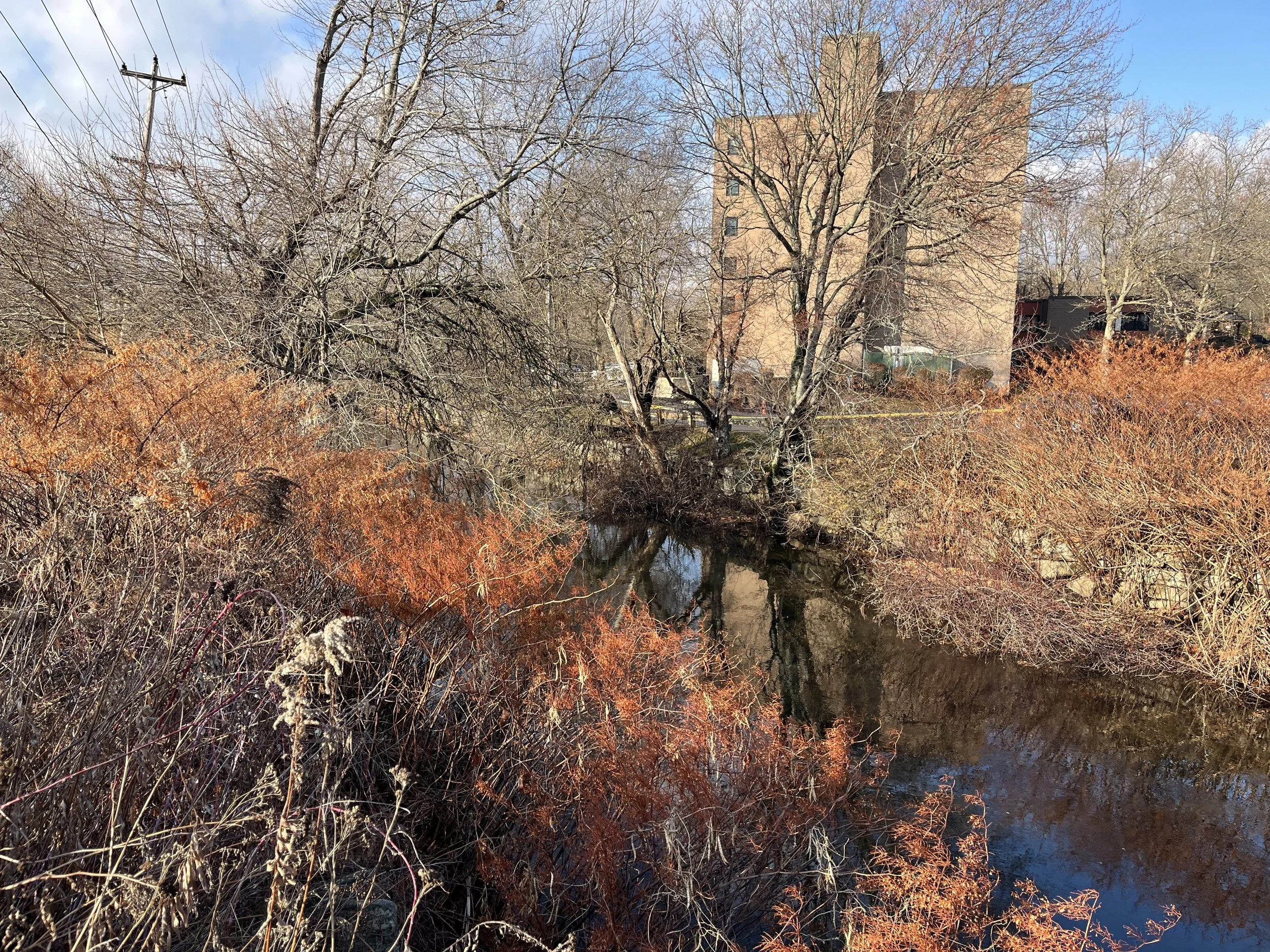
Woonasquatucket River Watershed Council (WRWC)
North Smithfield to Providence, RI
The Woonasquatucket river spans 19 miles from its headwaters in North Smithfield to its confluence with the Moshassuck River in downtown Providence, and flows through a 50 square miles watershed and seven Rhode Island towns. Its name, meaning “the place where the salt water ends,” reflects the river’s tidal and deep cultural roots, with a legacy of farming, fishing and industry that shaped the regions homes, mills and neighborhoods making Providence a hub of art, industry and culture.
WRWC, conceived in1990’s as an initiative to expand green space for communities in Providence by transforming the forgotten River, it has since expanded its reach to the entire watershed making it cleaner to fish, be swimmable and prevent flooding disasters. Multiuse trails, bike paths within ten minutes walking distance provide safe walking areas to this underserved community and empowers them to lead climate change efforts in their neighborhood.
Making the bike and walking trails visible, welcoming, identifying and removing invasive plants while also sustainably restoring the area with native trees, shrubs and perennials that stabilize the banks of the river, provide habitat are some of the activities recent efforts have focused on. Educating the community on native plants, storm water projects and maintenance helps ensure these areas will be maintained and supported long-term providing jobs and stewardship opportunities to the community. WRWC’s environmental education programs along with its work within the watershed helps create positive environmental, social, and economic change by revitalizing greenway, and its communities.
Woonasquatucket River Watershed Council (WRWC) – Manton river restoration, and outdoor classroom area
Johnston, RI
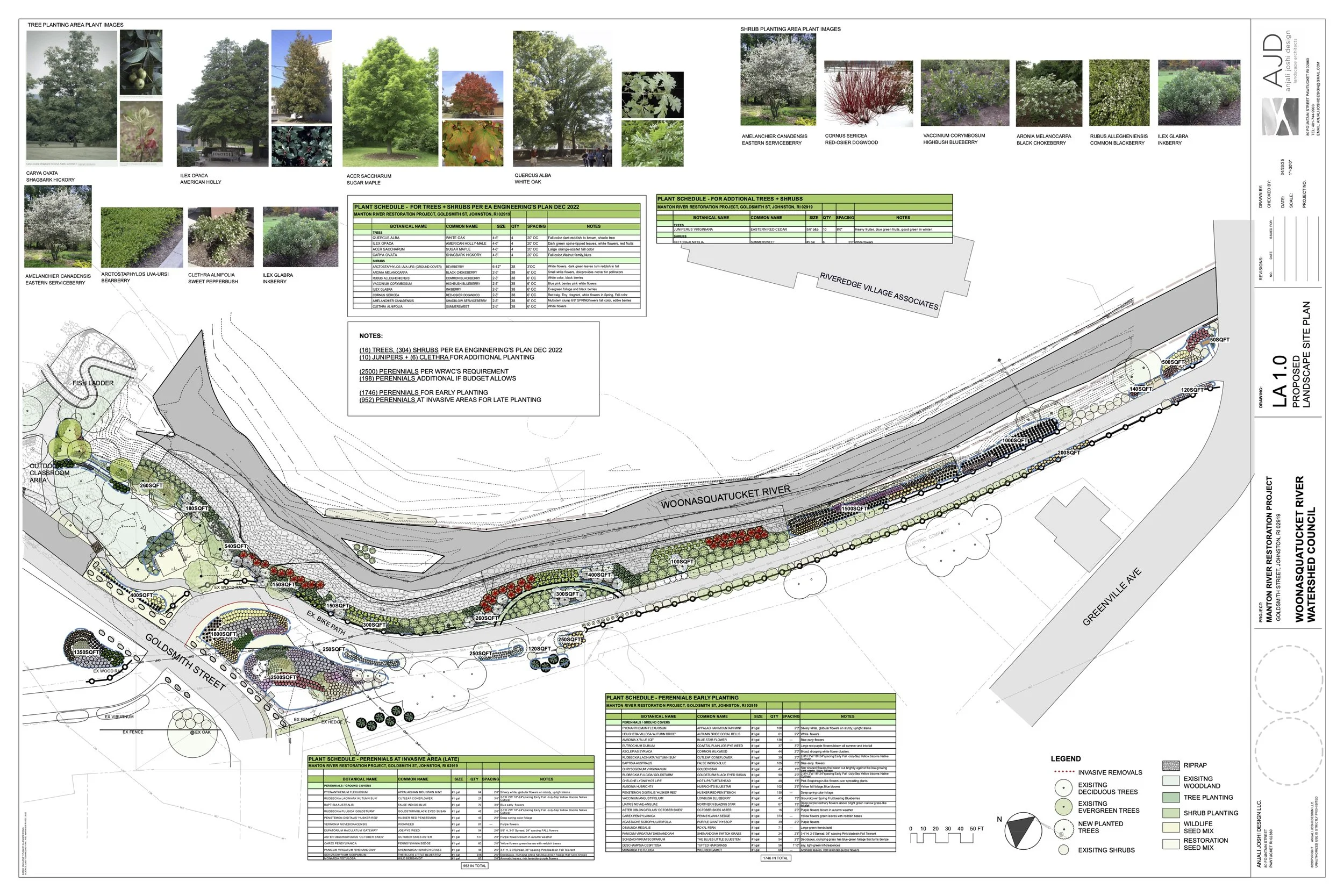
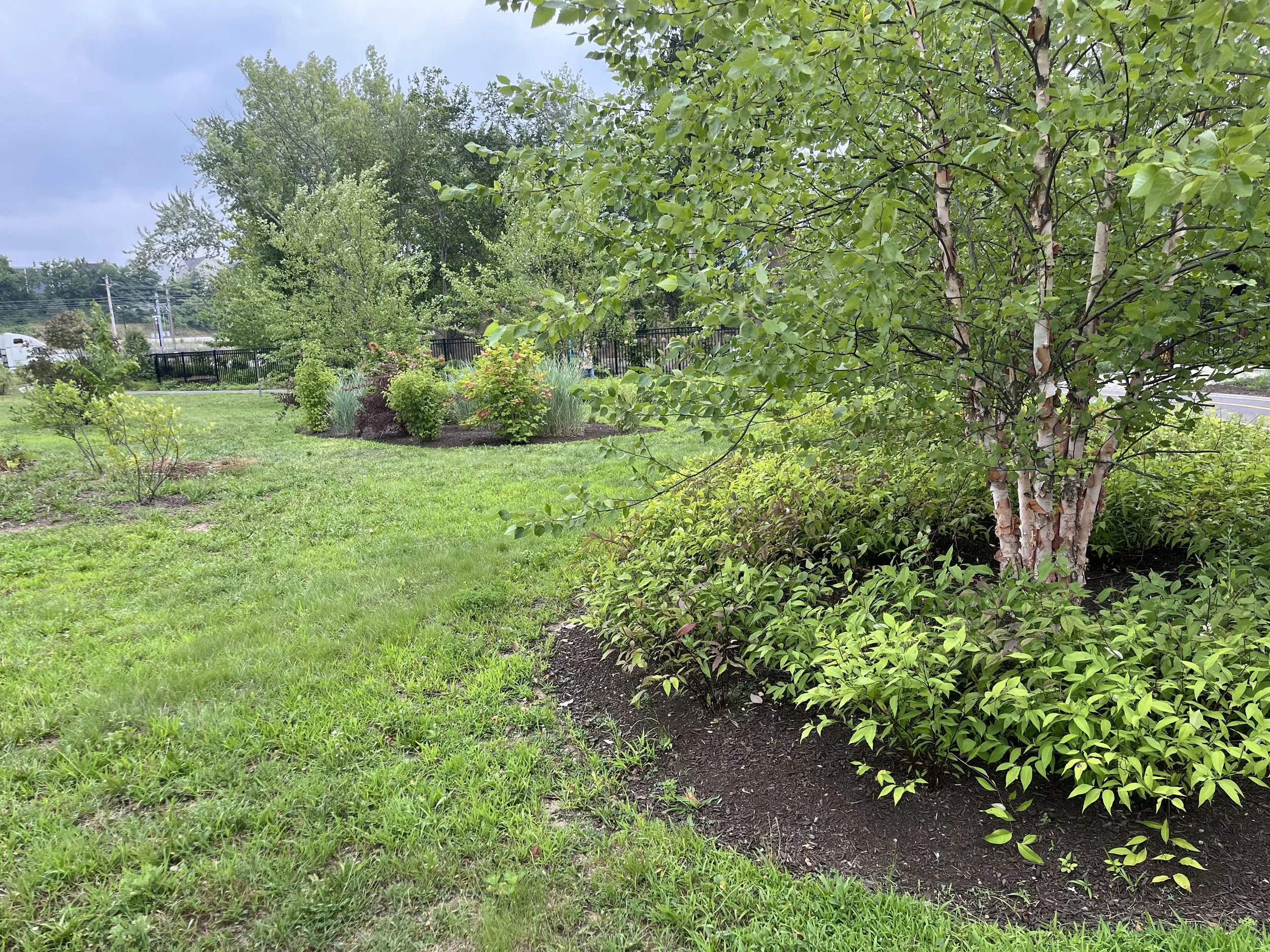
Our design task was to connect the river restoration project by the engineering team, the fish ladder area, the Outdoor classroom project by WRWC, and the future environmental center (on donated land by abutter’s) creating a cohesive experience in the landscape via native plantings. Native trees, shrubs and understory perennials and meadow and river restoration species of perennials were used to create continuity and habitat to stabilize the banks, against stormwater damage, soften the riprap edges and create a landscape for varied colors, textures while also creating habitat for wildlife and pollinators. Undisturbed site sections that were intact provided useful information on the plant species that Building on what was on site for plant species invasive species were identified, carefully flush cut and sprayed with vinegar before the areas were replanted. The design was carefully thought through for safety and maintenance as well to keep the bike trails safe and easily managed by the River rangers who do the hard work of keeping the areas managed. Plantings had to also consider power line, abutters privacy and security and safe seating areas for people in wheel chairs.
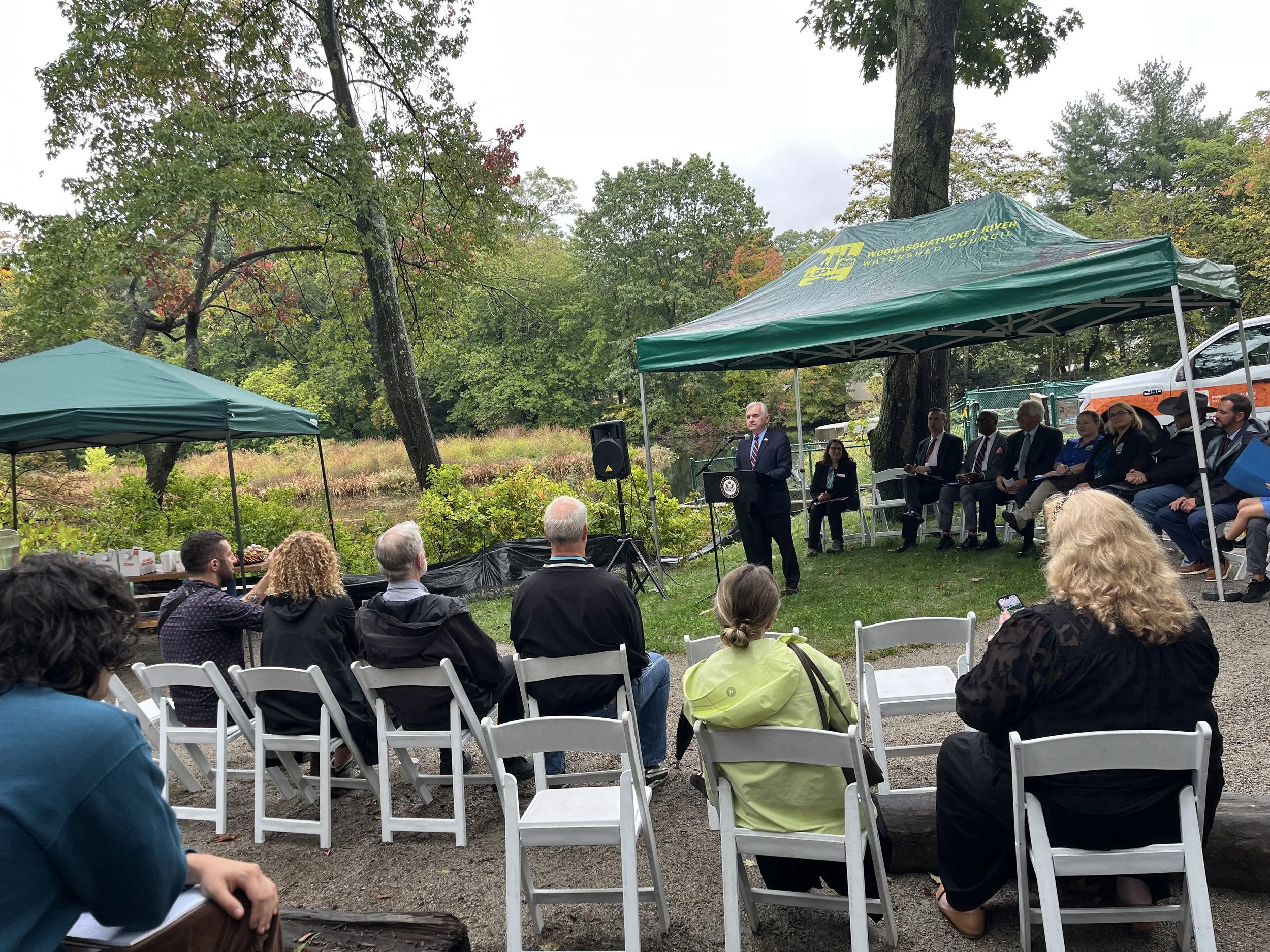
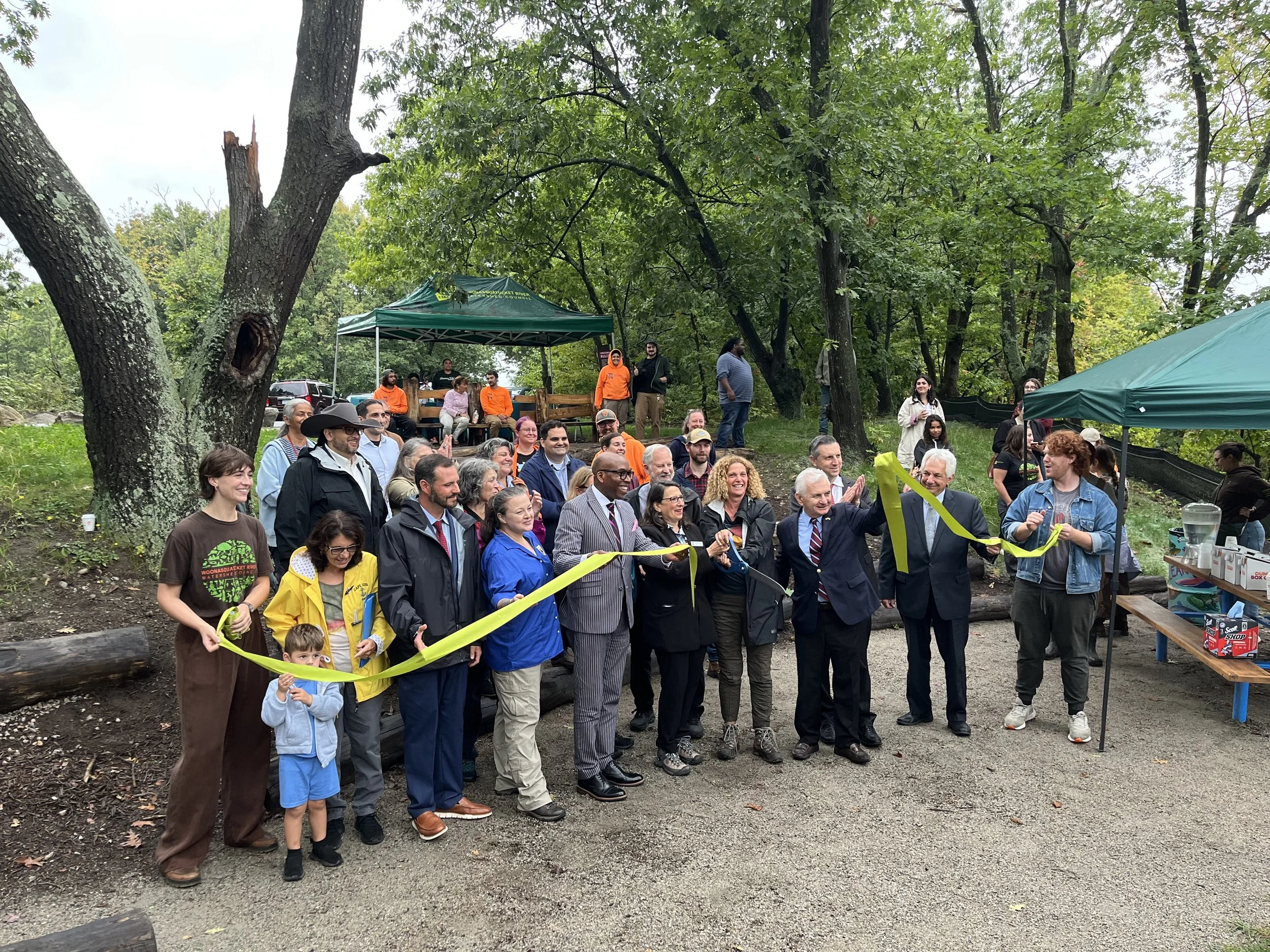
Woonasquatucket River Watershed Council (WRWC) – Gotham green Bike path
Providence, RI
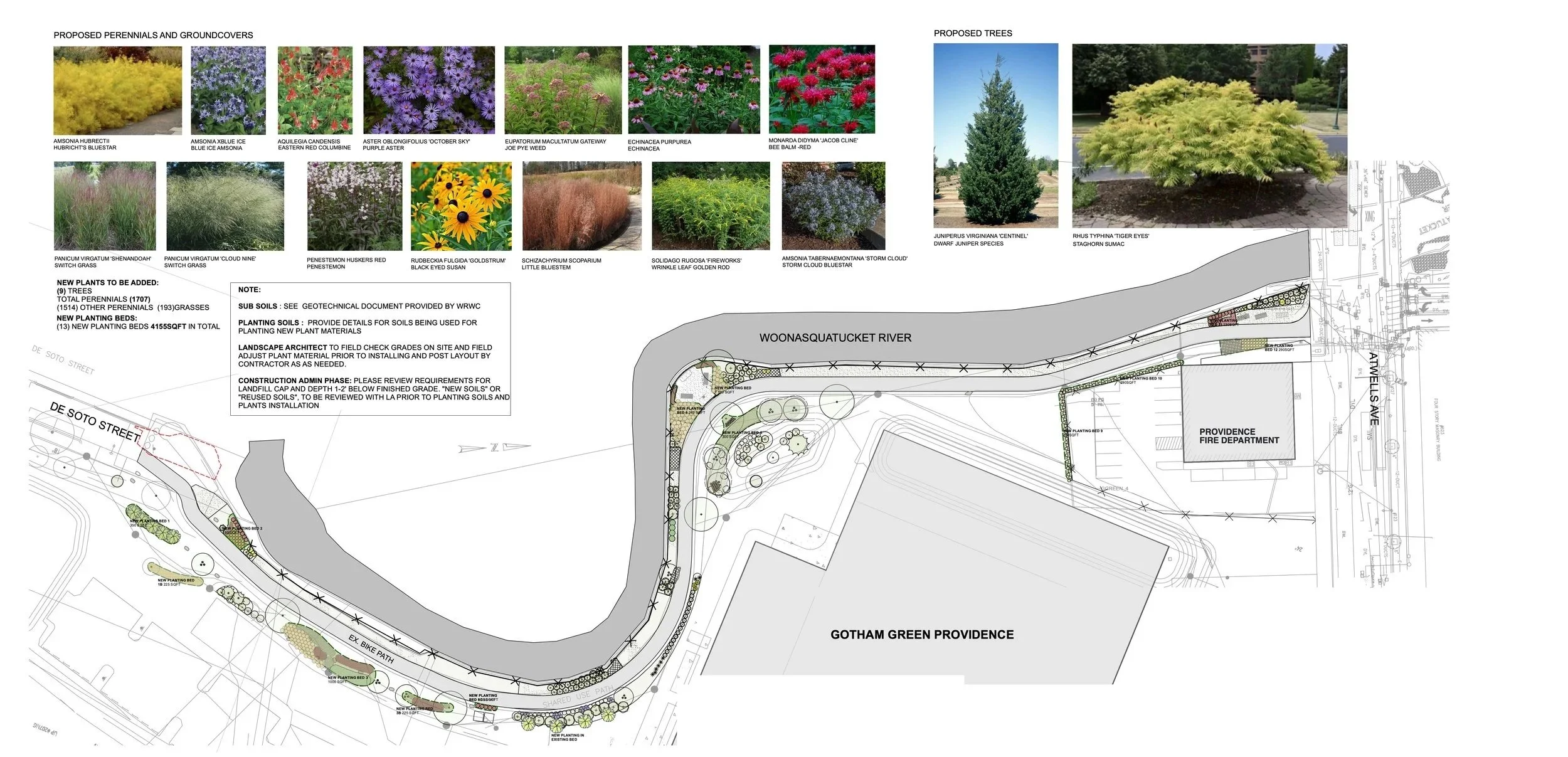
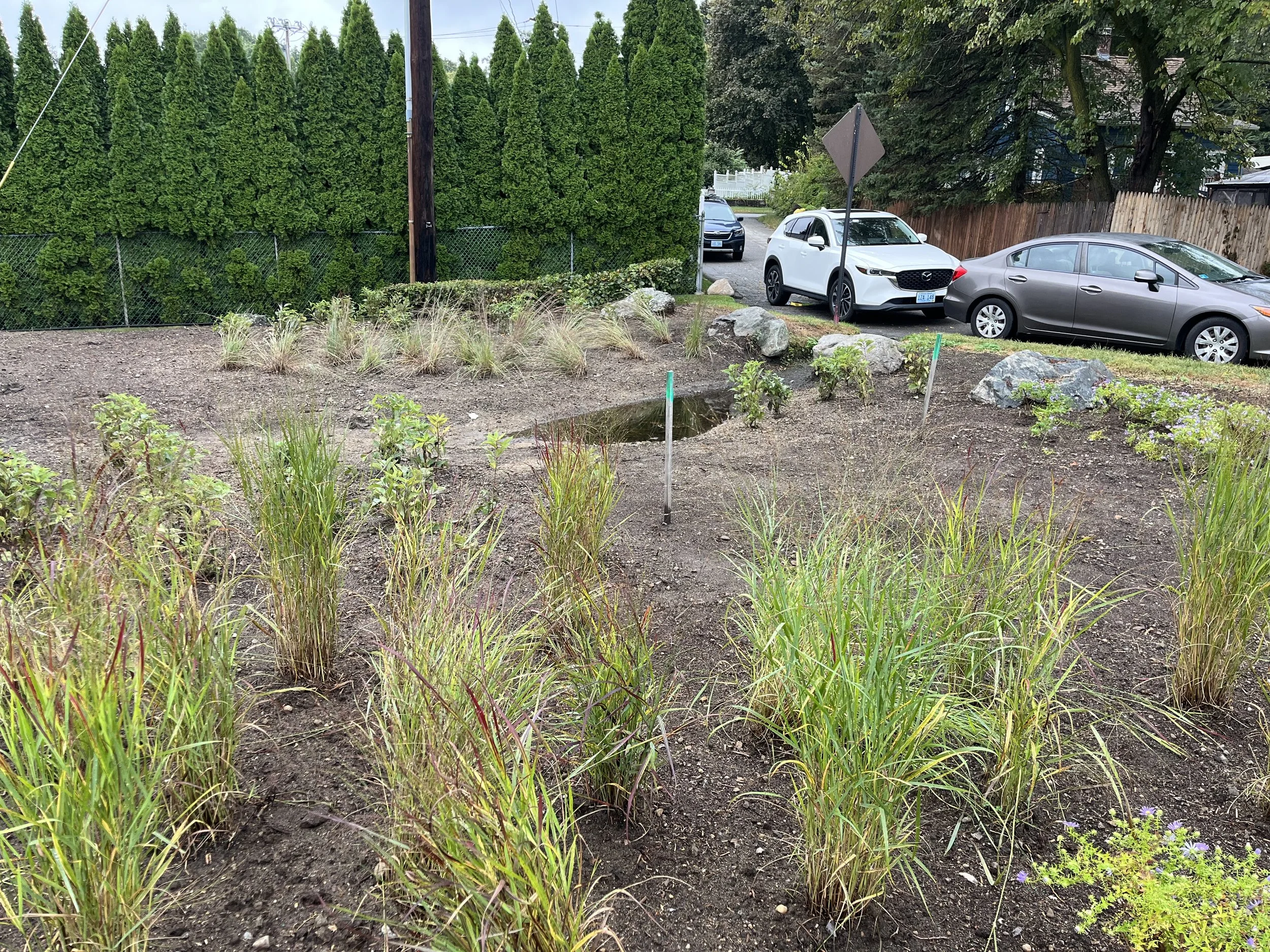
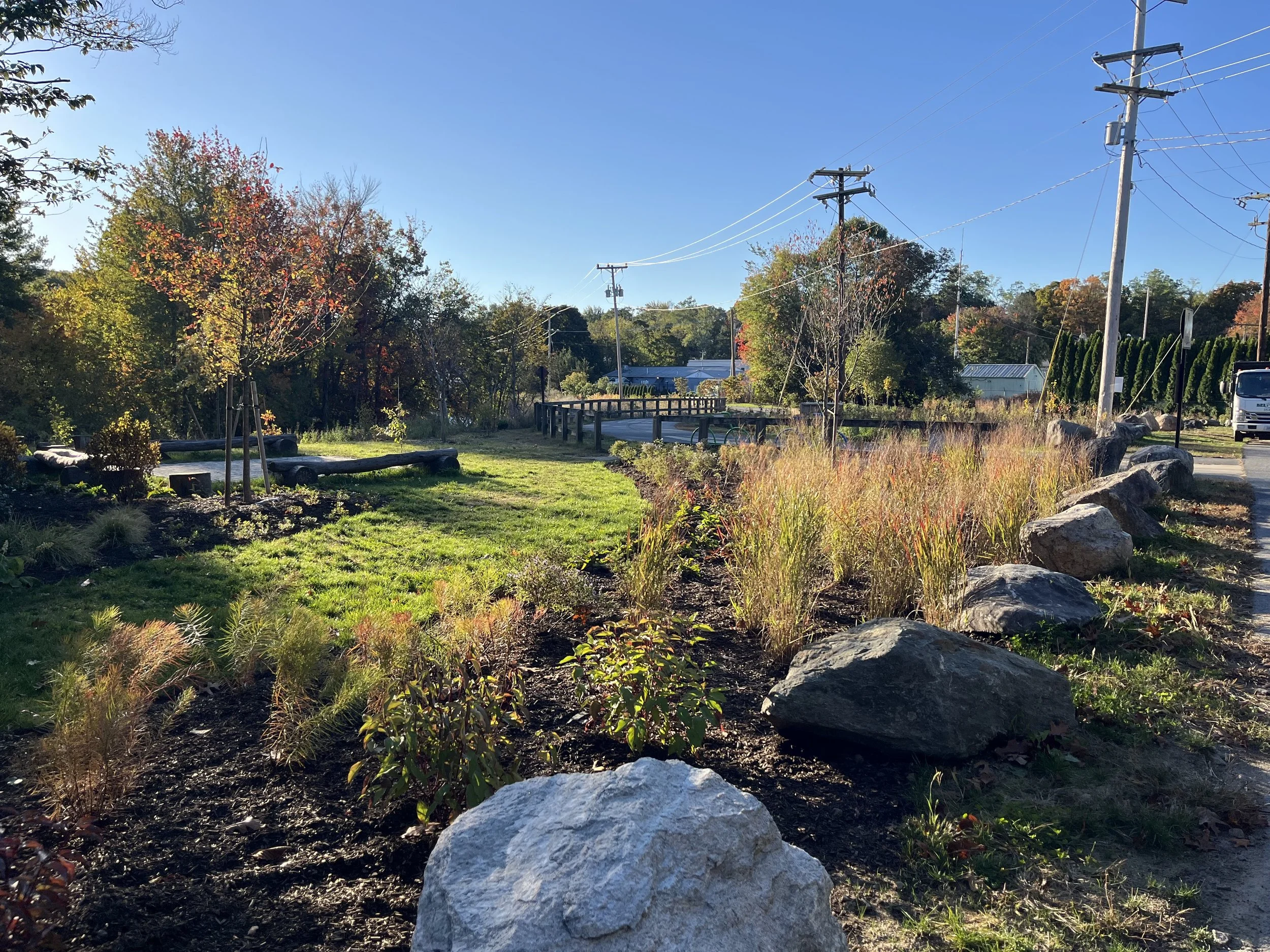
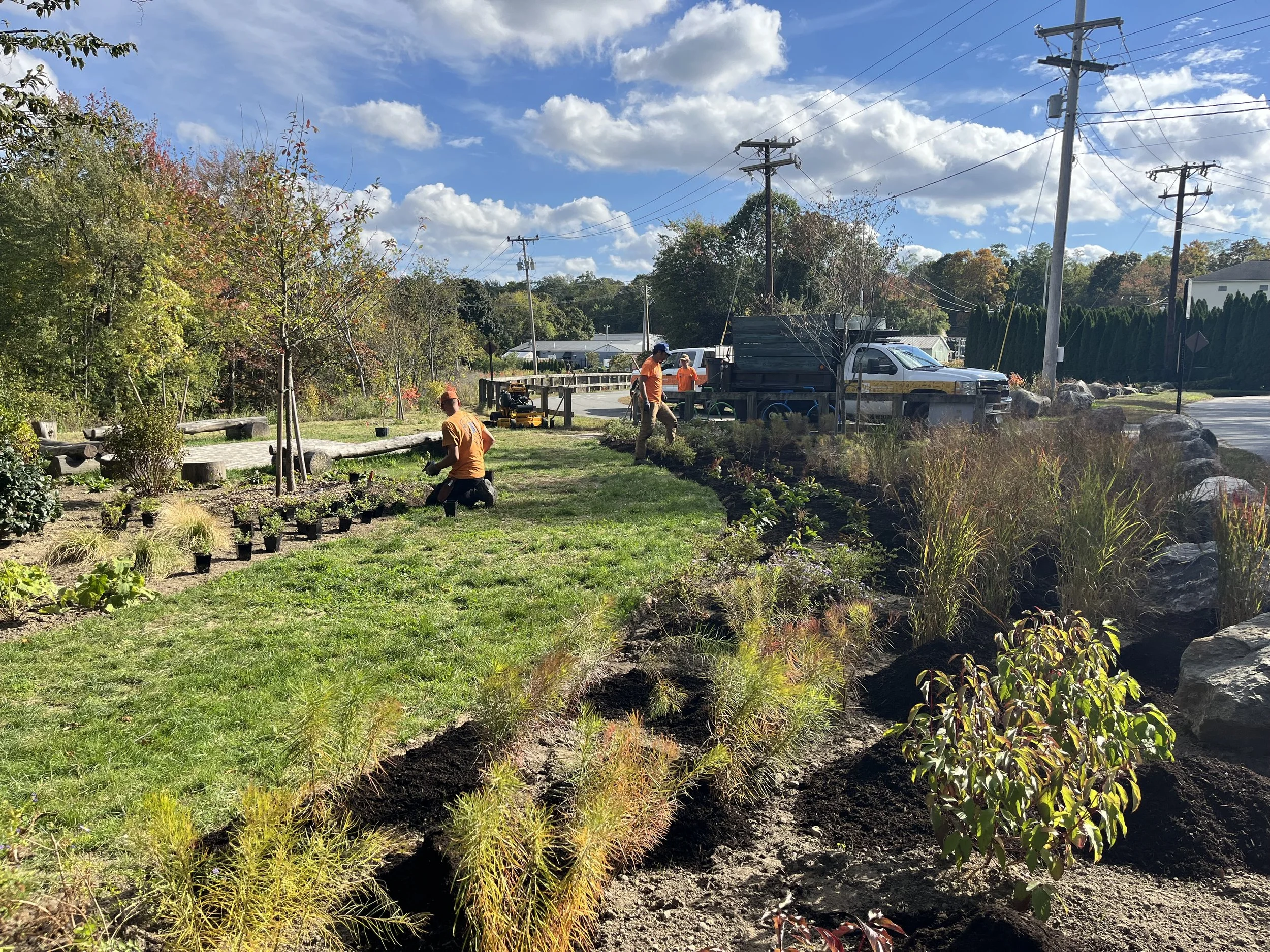
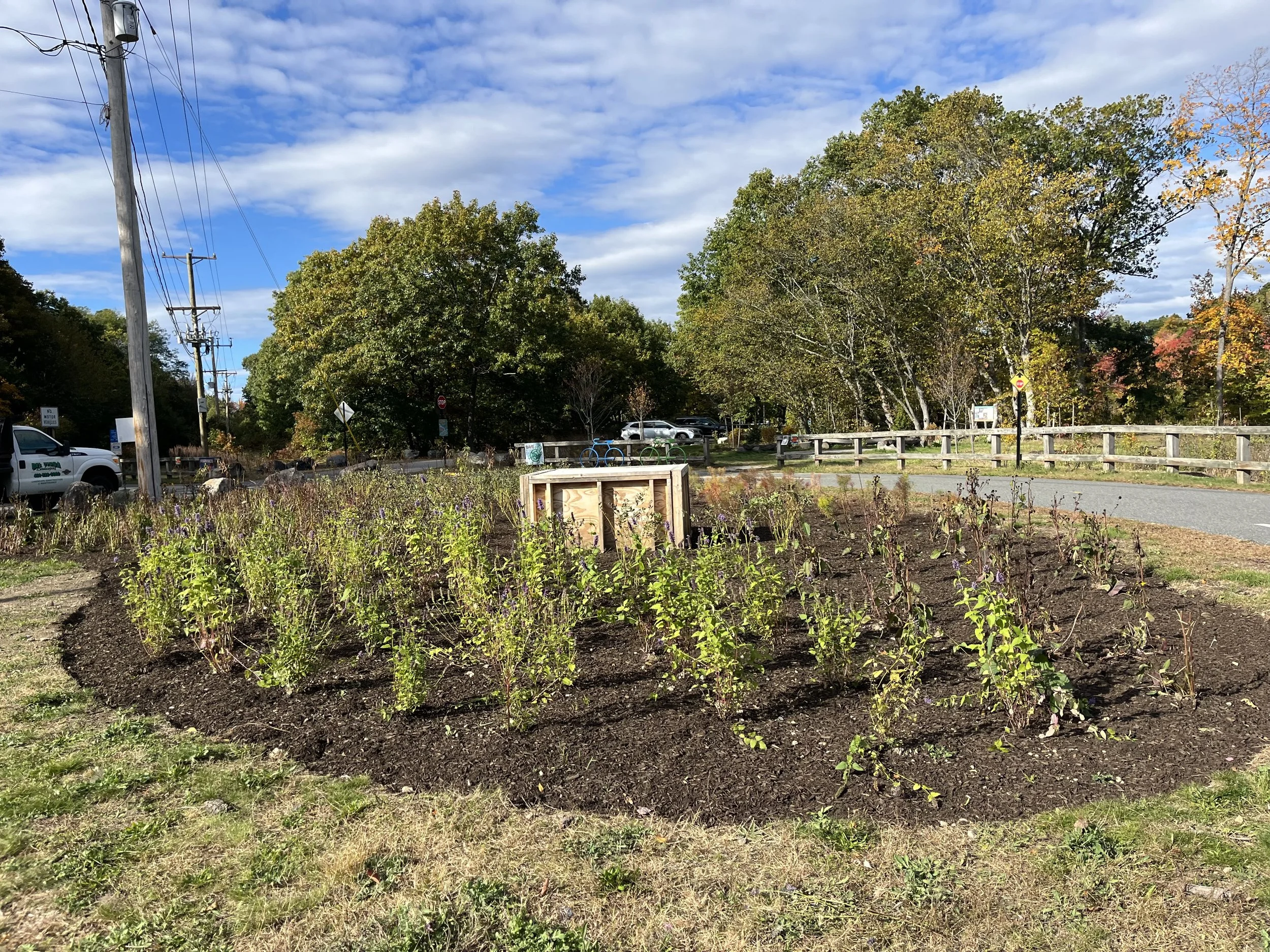
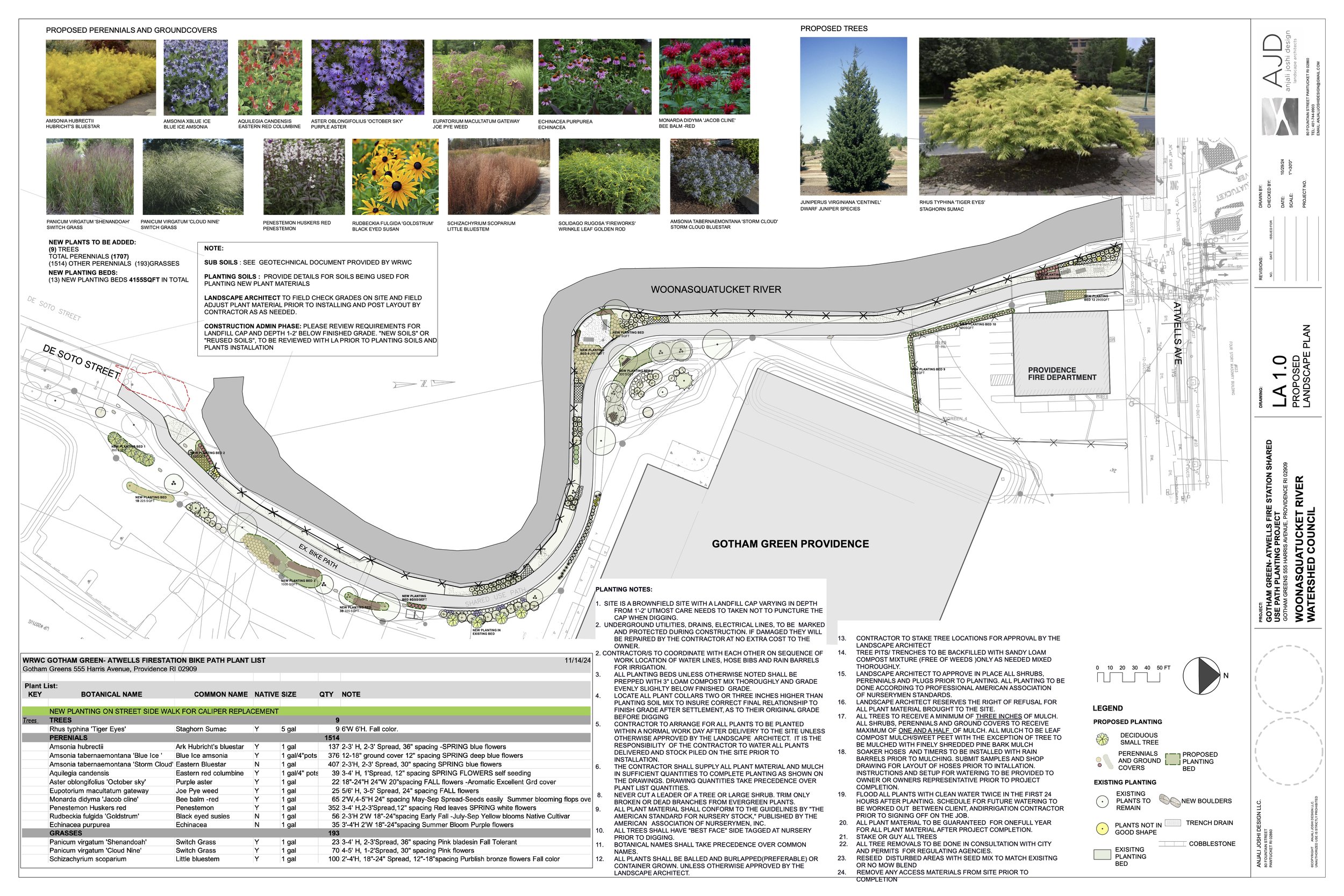
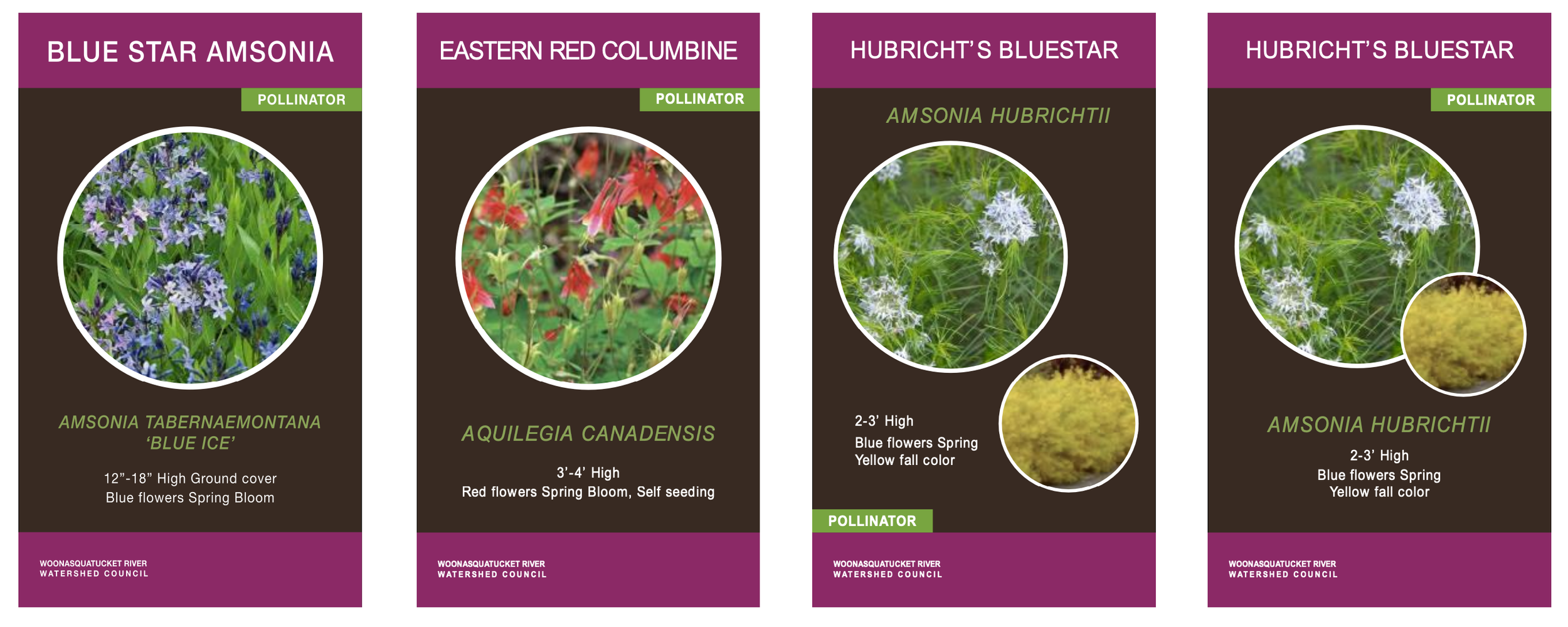
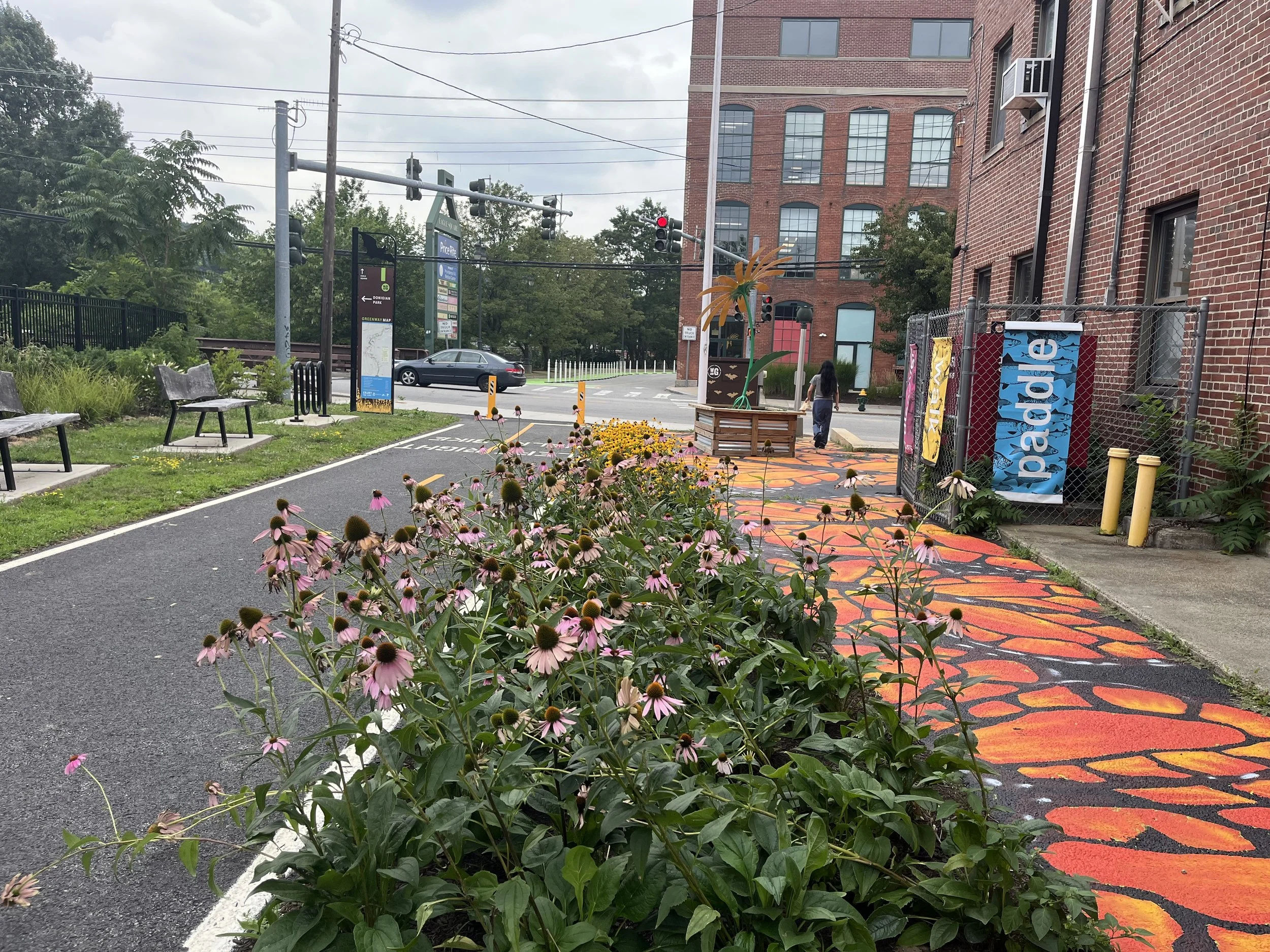
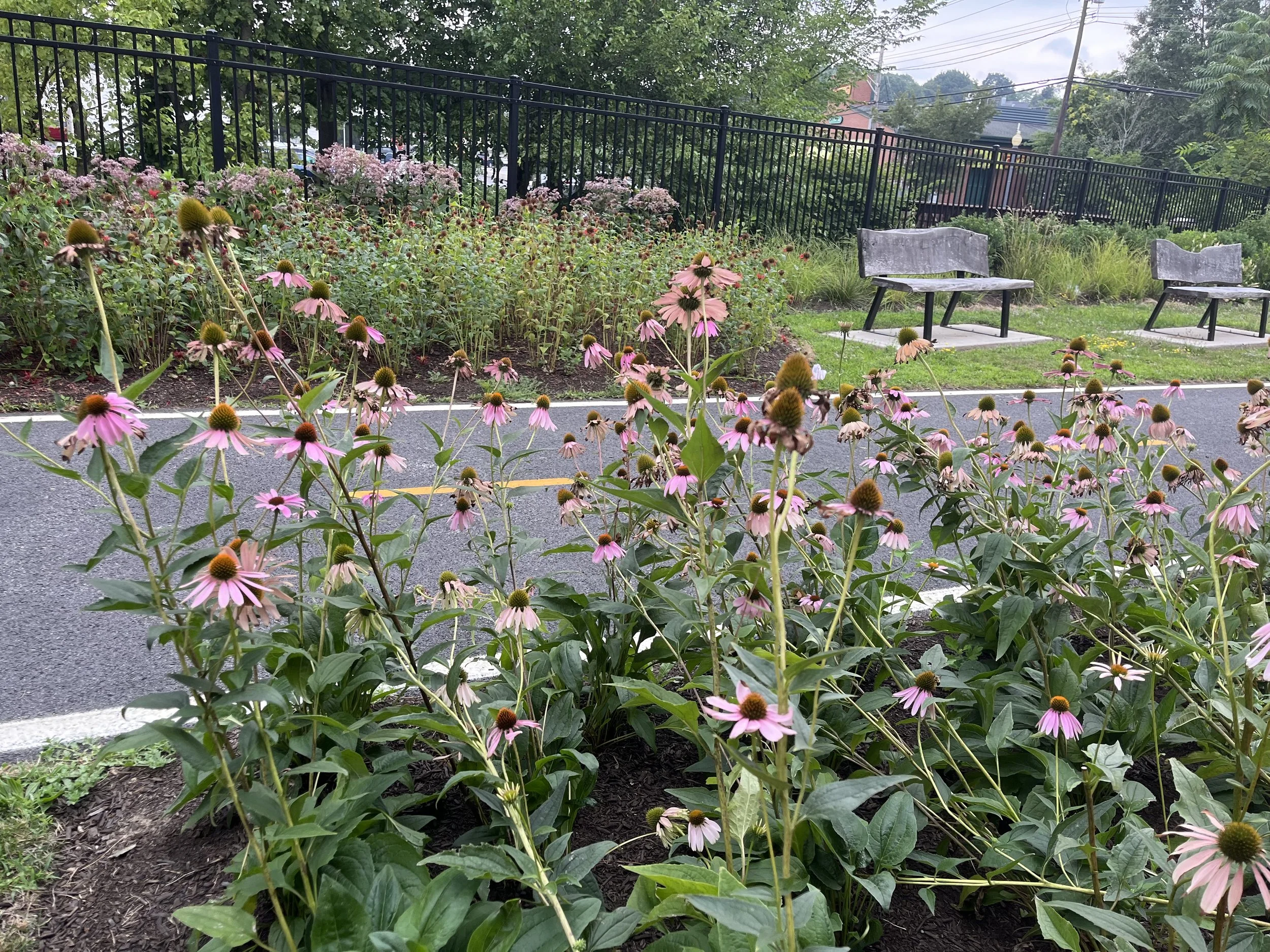
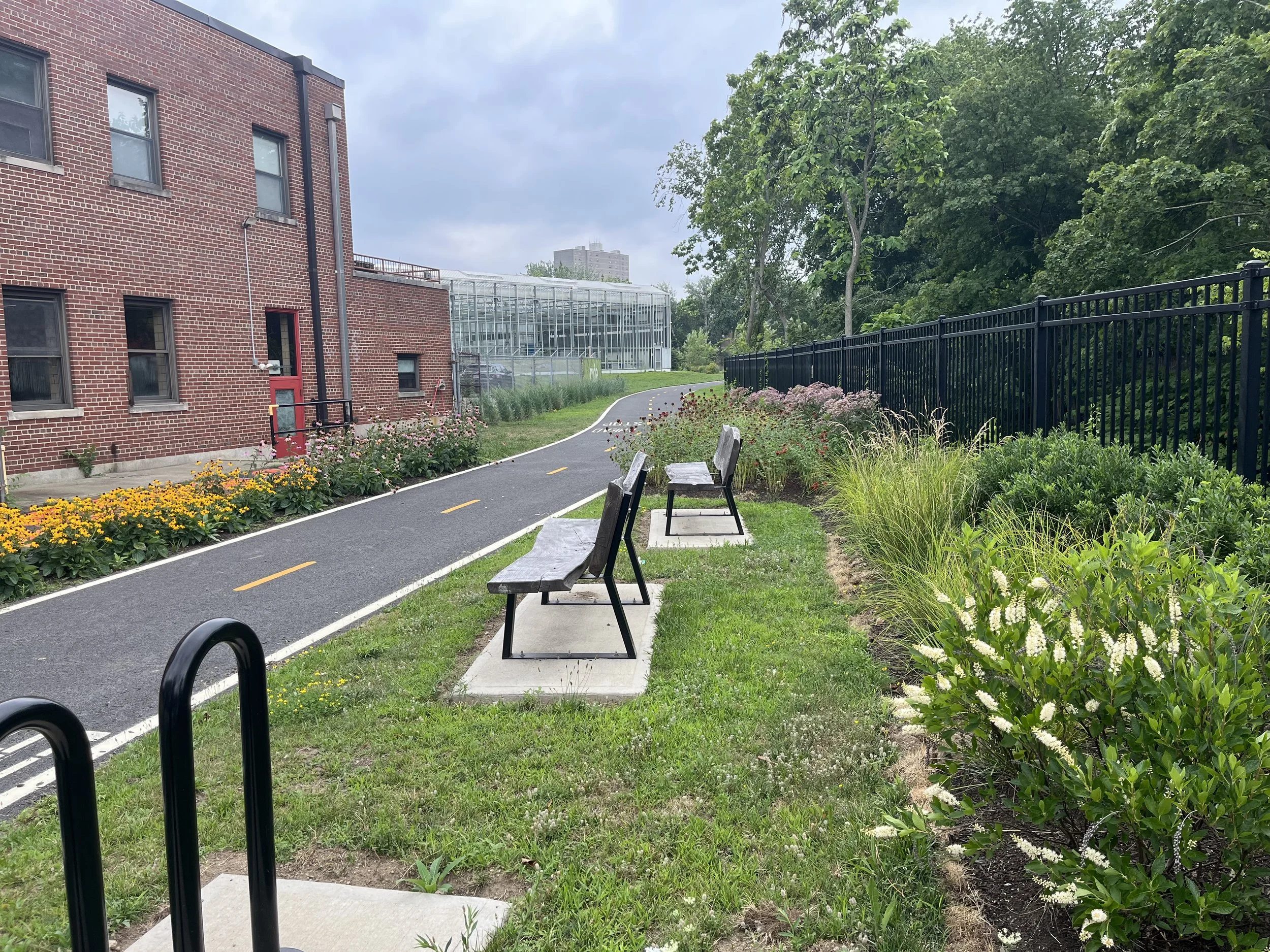
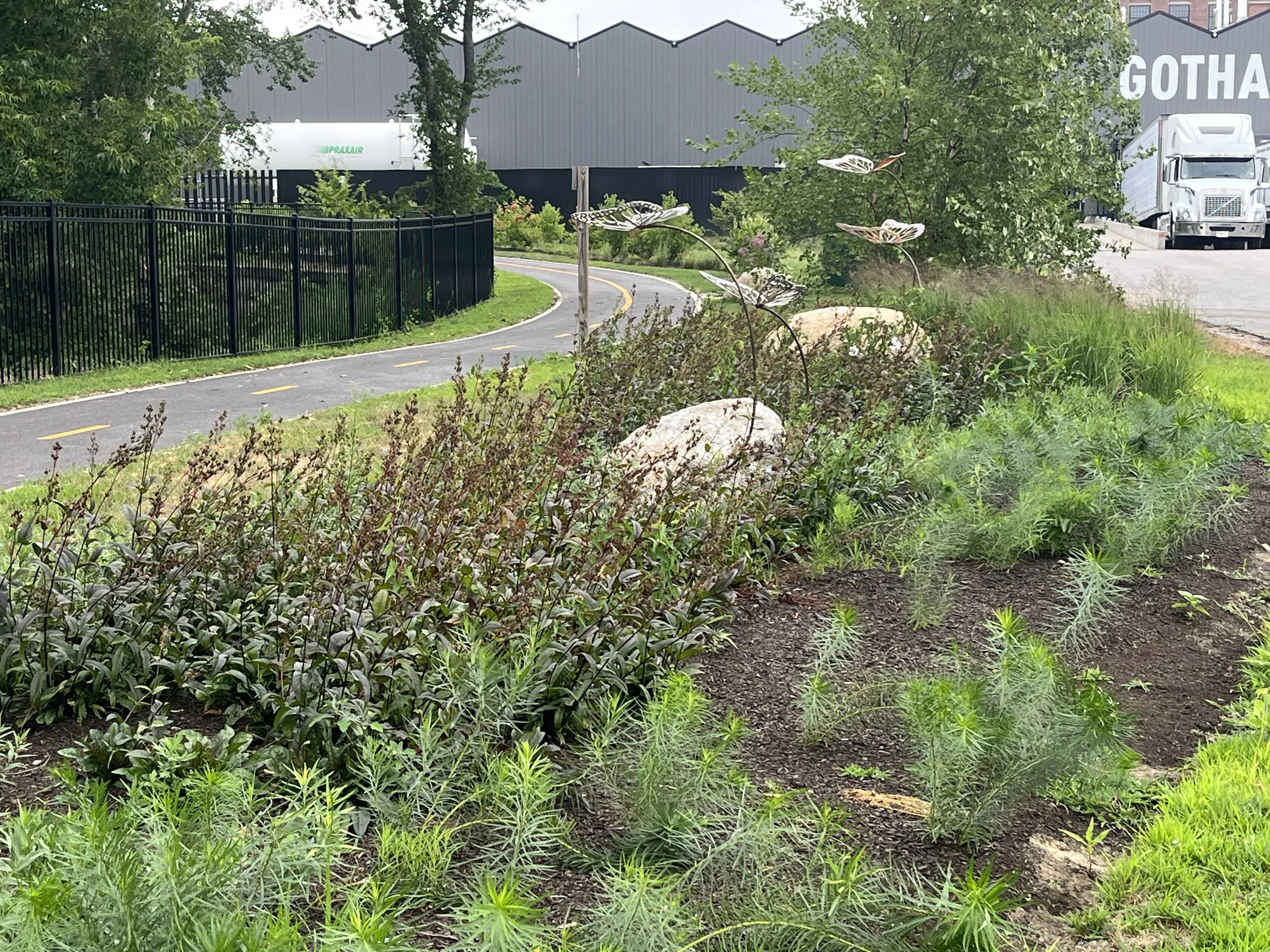
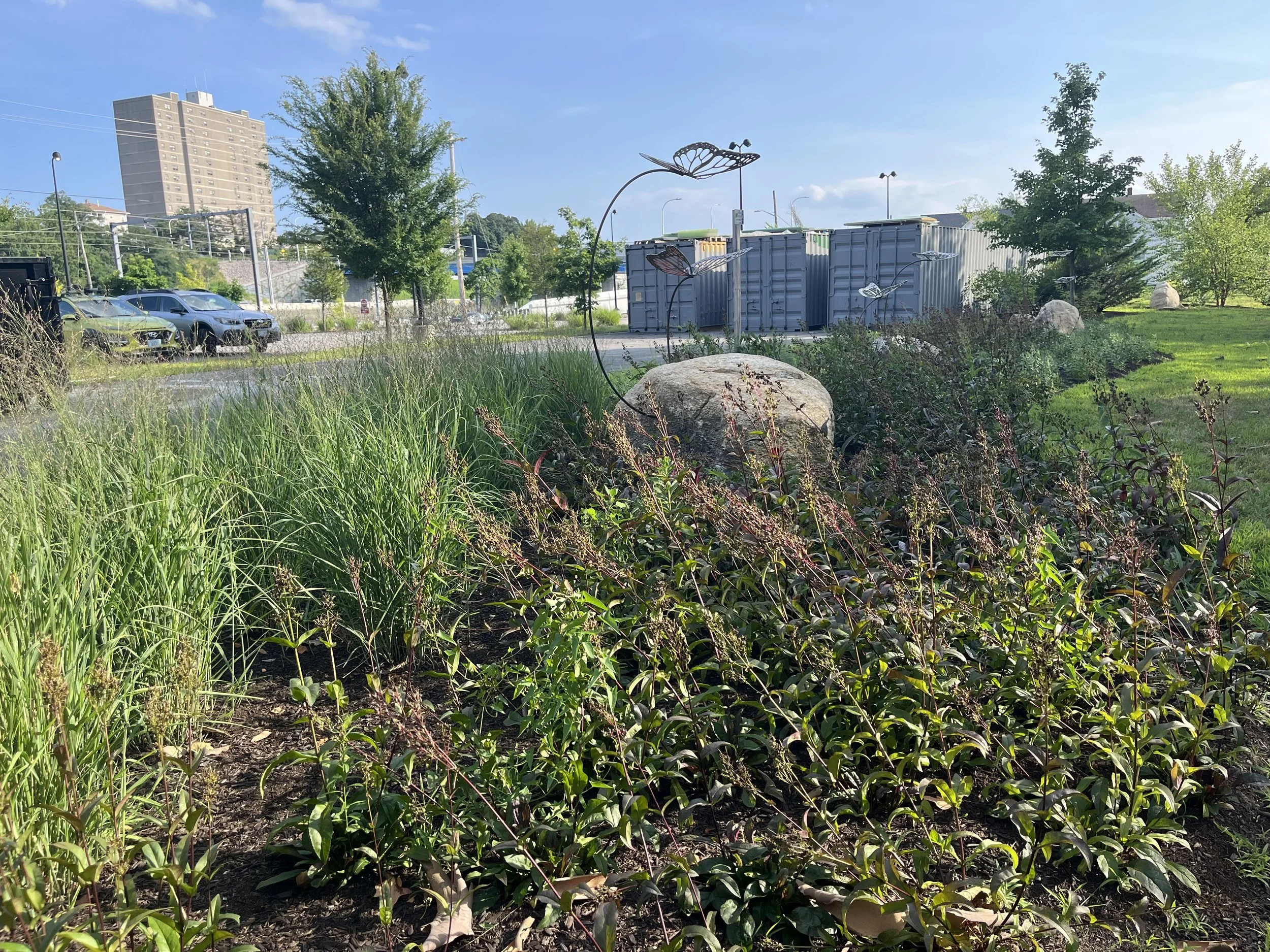
The new native plantings were added in this section of the Bike path to connect areas of existing tree, shrub plantings, along the Bike way done as part of the site development by ‘Gotham Green’. Strategic identification and removal of areas of invasive species, flush cutting and spraying them was done first to see which areas would receive new plantings. Adding plant layers to the existing trees and shrubs as well as seating areas, and screening for abutters like the fire station was done first to add varied seasonal and enhance the existing native plant palette of shrubs and trees. Large boulders and native pollinators were added to separate the parking lot from the Bike path to discourage cars driving on to the path and for pedestrian safety. Regrouping shrubs and pollinators to create interesting layers and depth to the planting to make it naturally fit its site was another important goal. Signage with plant names and species information was created as an to educate the community on how to use native plants and their growing conditions. 2000 pollinators, and 13 different species were added that tolerate flooding and compete with the invasive species in this section of the Bike path.
The project culminated in us leading an educational presentation and tour of this Bike path section to teach WRWC’scohort of “Campeones del Combate Climático” an18-month climate resilience program, for community members to learn about native plants, gain skills to plan, implement, and advocate for climate resilience projects in their own communities along the river.
Woonasquatucket River Watershed Council (WRWC) – Leo Bouchard environmental education center
North Smithfield, RI
WRWC in partnership with the Leo Bouchard Conservation Center, Town of Smithfield uses this property for its environmental education programming. Located on the Stillwater Reservoir, the center will serve as a key location for the WRWC’s environmental education programs in the northern part of the watershed contribute significantly to create positive environmental, social, and economic change by revitalizing greenway, and its communities.
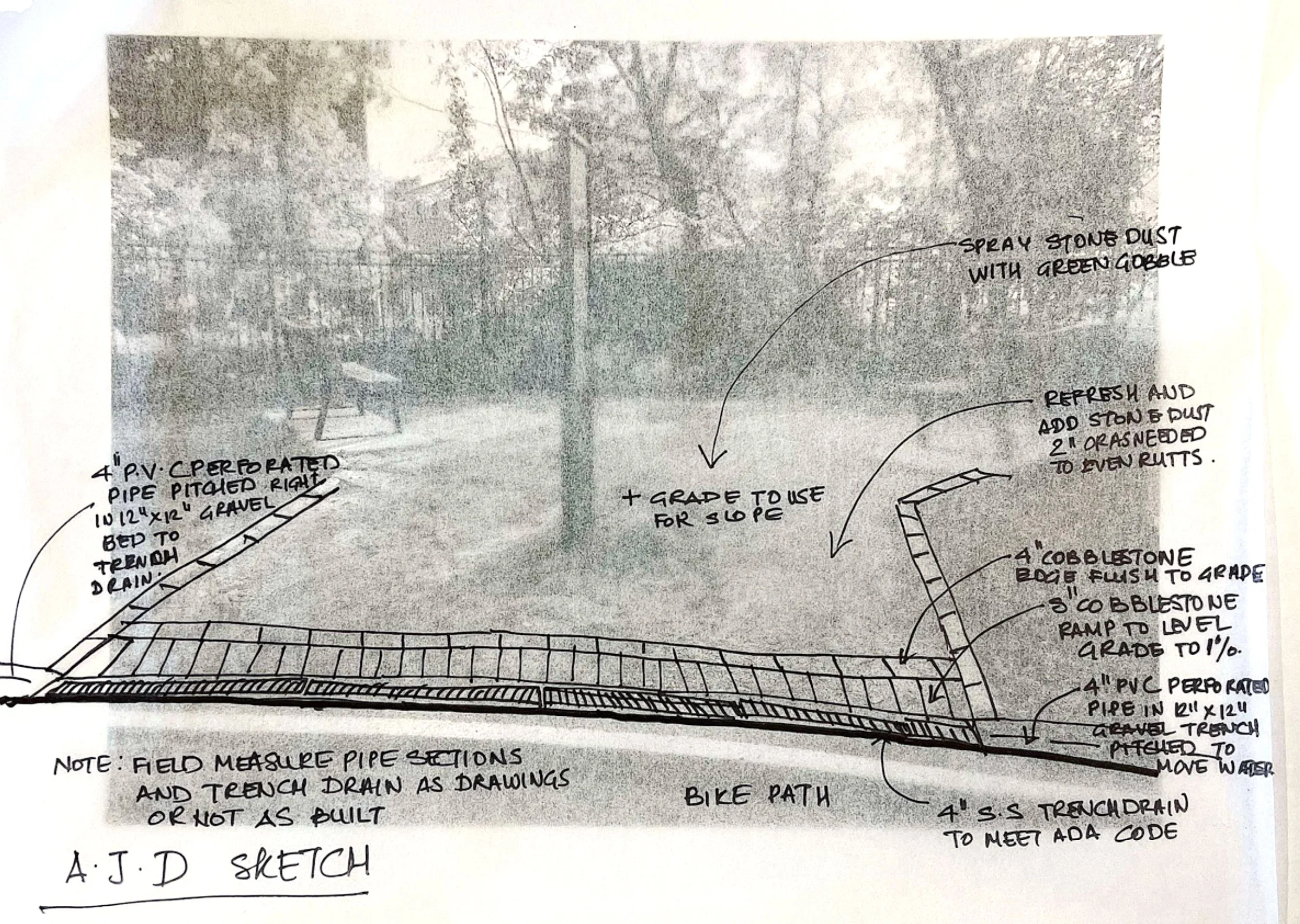
The design includes developing a site plan that addresses storm water challenges along the reservoir, with removal of impervious pavement, adding pervious parking areas, adding native plants along the waters edge and making the picnic and outdoor areas wheel chair accessible. A small childrens play area and a small building for parking vehicles that are currently within the center is planned. Regrading the site with minimal impact to the watershed will help ensure this center is a resource for the generations to come.